Softer, smoother, shinier, healthier.And longer.
What keratin actually does for wavy, frizzy and in-between hair — including how much of your wave you should expect to lose.
Here’s what a keratin treatment does for it:What Changes
We’re known for curls. We specialize in this too.
Wavy, frizzy and in-between textures respond extremely well to keratin — softer, smoother, far less styling time, and better length retention over the months that follow.
There are trade-offs, and there always are. Less frizz means less volume, and a softer wave than you have now. Most clients find that trade very much worth it — but you should know it before you book, not after.
Open What You Need
The honest answers
Am I going to lose my wave?Some of it, yes
Some of it, yes — and we’d rather you hear that here than in the chair. Looser waves, finer hair and more delicate textures should expect a degree of wave reduction. On finer hair especially, the pattern can end up significantly softer or close to straight.
The less wave you start with, the more of it you’ll lose. The more wave you start with, the less you’ll lose. It sounds backwards, but it’s the single most reliable thing we know about this — a soft bend has the furthest to travel and the least holding it in place, while a defined wave has real structure to hold onto.
Your strand matters just as much. Fine hair gives in easily. A coarse strand has more to weigh down and smooth out, so it keeps its shape.
Darker means more looseningMost of our type 1 and 2 clients live in the left-hand column, which is exactly why this matters here. You have the most to gain and the most to lose.
You will lose volume tooFrizz and volume are the same thing
This is the trade-off our type 1 and 2 clients notice most, and we’d rather you heard it here than in the mirror.
Frizz and volume are the same thing wearing different names. A lot of what you read as body and fullness is frizz holding your hair away from your head. Take the frizz down and your hair sits closer.
Some clients find their ponytail feels smaller afterward. That isn’t hair loss — it’s the same amount of hair taking up less space.
And what it doesn’t doFour honest limits
- It won’t remove all your frizz. A good treatment reduces frizz. It doesn’t get rid of a hundred percent of it.
- It won’t remove all your wave. If you have natural wave, you keep a version of your natural wave.
- It won’t undo damage in one visit. Heat damage, bleach, color — one treatment can’t restore your hair back to zero.
- The gentler we go, the more frizz stays. The more we protect your wave, the more frizz you’ll still have. Especially on your first one.
Why it takes more than one appointmentThese treatments stack
Smoothing treatments on wavy hair are designed to be used alongside heat. They aren’t designed to give you air-dried hair after one appointment.
If your goal is to air dry your texture without heat, that takes a few appointments. These treatments are cumulative — they stack up in your hair.
Less wave on top, more underneath?That’s Irish curls, and it’s common here
If your top layer has drastically less pattern than the rest — possibly close to straight, with mostly frizz — while the hair underneath, especially near your nape, holds far more curl, we call that Irish curls.
It’s the version of multi-texture we see most in wavy clients. Keratin will never put curl back into your top layer, but we can relax the curl underneath so the two layers sit closer together.
Is smoothing a good fit for me?Five signs it probably is
- Humidity or dryness gives you frizz you can’t get ahead of.
- You want your hair more manageable without giving up all your volume.
- You reach for hot tools most days and would like your mornings back.
- Your hair is color-treated and needs structural support.
- You want softness and shine without changing your hair’s identity.
What actually happens in the chairFive steps, about three hours
- Consultation. Your hair type, density, porosity and history decide the formula.
- Preparation. A thorough cleanse to clear buildup and open the cuticle.
- Application. Worked through in parts, root to ends, according to what your hair needs where.
- Processing and sealing. Controlled heat seals the keratin into the strand.
- Finish and aftercare. Instructions specific to your hair, not a generic handout.
How often will I come back?Every three to five months
Routine care, a seasonal reset, or part of a longer plan for your hair — whichever suits you. Depending on how yours responds, most clients repeat every three to five months.
What’s in it?No formaldehyde, no fumes
Keratin is a protein your hair already makes. Heat, chemistry, UV and washing deplete it over time; our treatments put it back and seal the cuticle.
Non-toxic formulas only. No formaldehyde, no fumes.
Traveling in to see usEverything you’ll need
We still can’t quite believe our clients fly in for us. If you’re traveling in, we’ve put together where to stay, how to get here, and how to time your first wash around your flight home.
Is this what you actually wanted?Your honest out, with no hard feelings
If you want perfectly effortless hair that you wash and go and never touch, we’re respectfully not the salon for you. That’s a straightening treatment, and you’d want to look into something like nanoplasty or Yuko instead.
What we don’t want is for you to book expecting something we can’t give you. This works for you if:
- You want your hair smoother, softer, and easier to style.
- You want to keep a version of your natural wave.
- You want less frizz, not zero frizz.
- You’re open to building your result over a few appointments.
Results vary with texture, density, previous damage and the health of your hair. There is no single version of this treatment.
See It
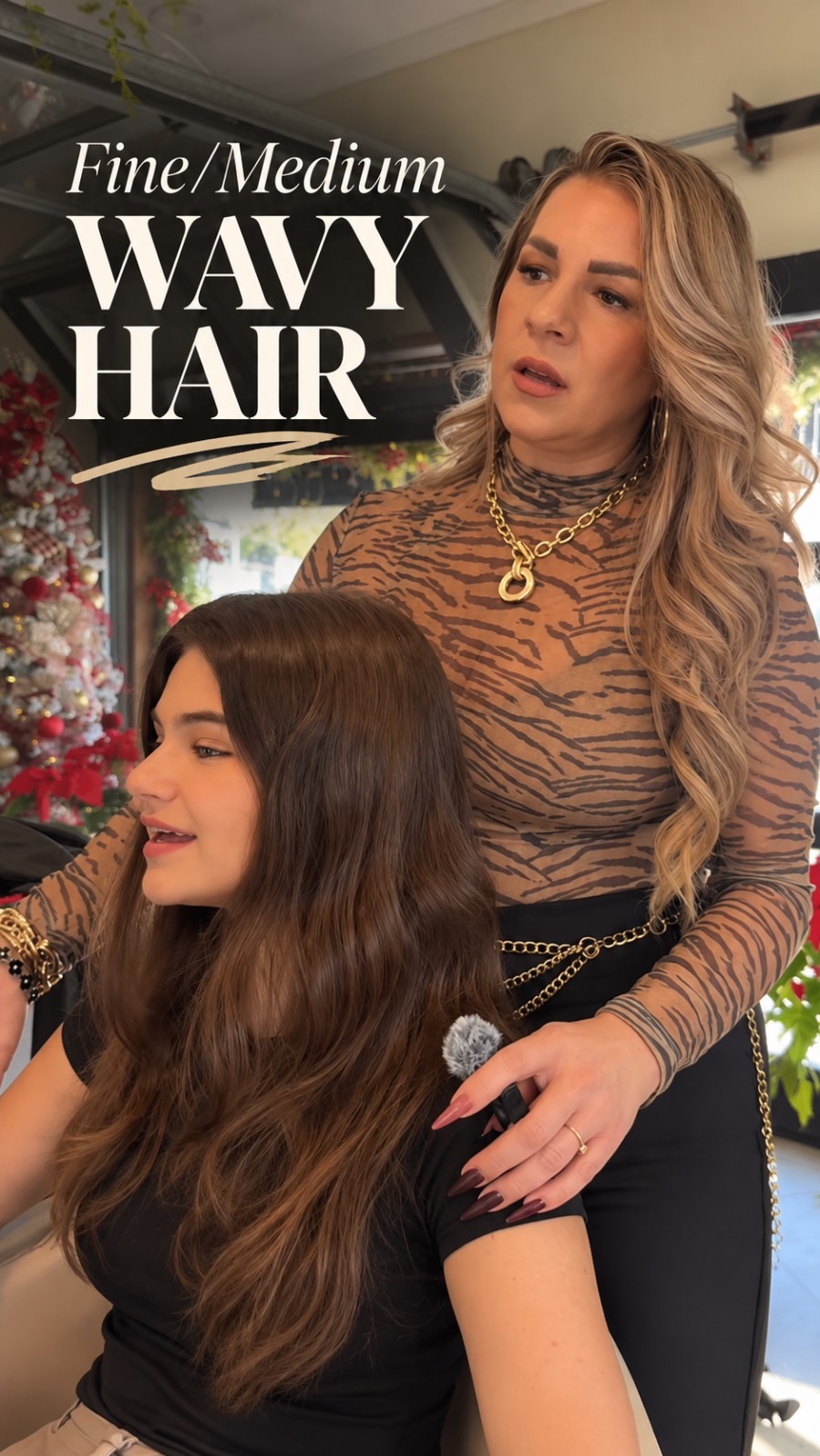
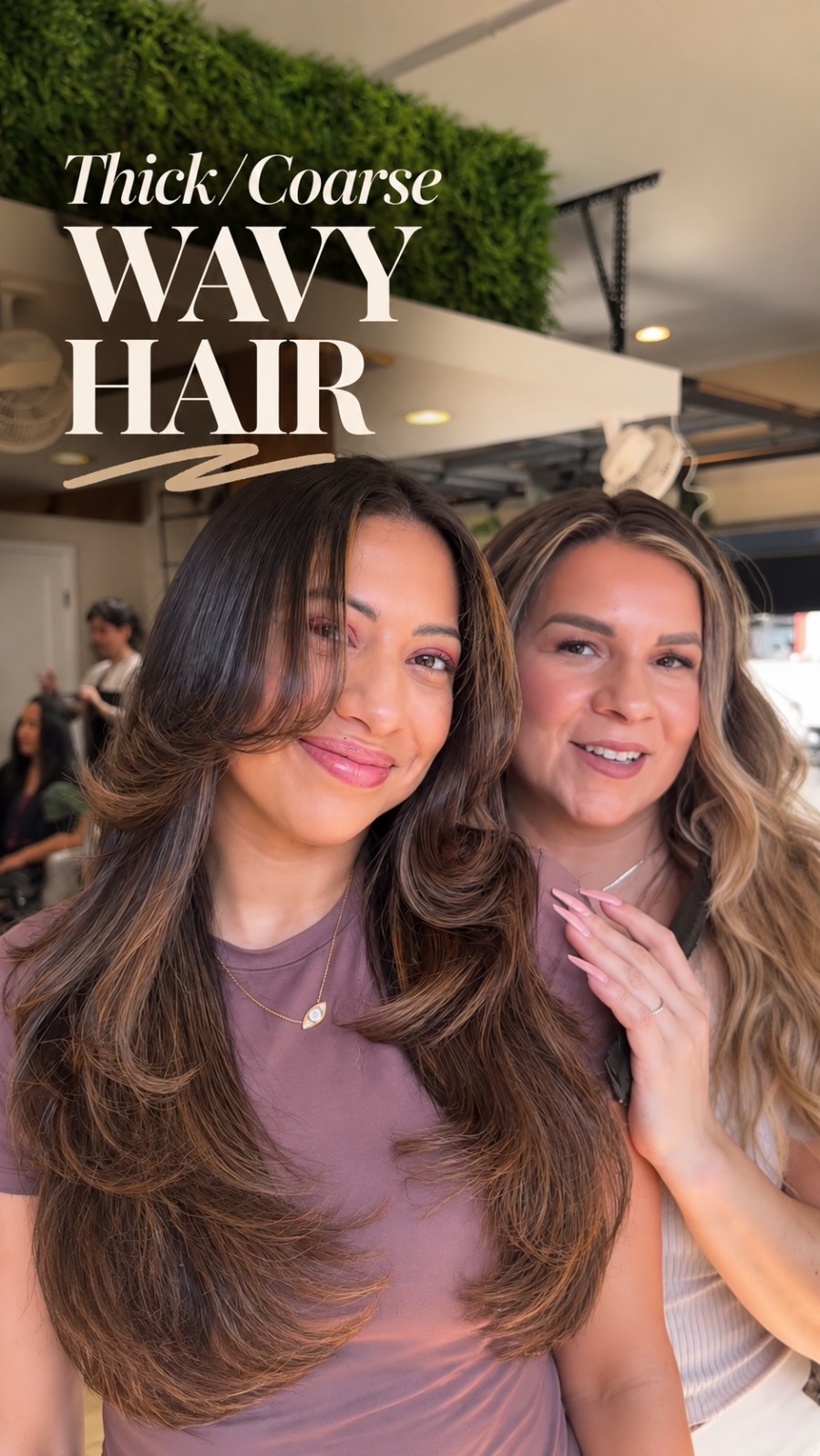
Two wavy clients, two very different strands
How fine your hair is decides how far your wave moves. These two show the difference.
Not sure keratin is right for your hair?
A free virtual consult is the easiest place to start. We’ll talk through your goals, your hair history and your concerns, and tell you honestly what a treatment would do for your texture — and what it wouldn’t.
We’ll tell you if it’s not for you. That’s the whole point of asking first.